Showing posts with label Scanian War 1675 - 1679. Show all posts

Sunday, 4 October 2015

The Danish Warship Tre Løver (Three Lions)

"Tre Løver" using Langton's Anglo-Dutch 1:200 range.

Returning this week to one of my favorite subjects, naval warfare.
I’m continuing the expansion of my Danish navy for the Scanian War, with the overall goal of representing the 3 squadrons of Danish admiral Niel Juel at a 1:4 ratio.

The Battle of Køge Bay.
A Danish Warship has caught fire.

Historically the squadrons contained around 12 warships, so with the 1:4 ratio, this means 3 model warships per squadron. With a total of three squadrons, that sets my goal at nine ships in total. 

Tre Løver, or Three Lions.
The Royal Danish Coat of Arms.

Nine models seems like a realistic target in terms of painting, but also a fair sized collection, enabling me to scale my games from the basic 2 player “squadron vs squadron” sized games, and up to games of 3 players per side, with each player commanding their own squadron.

Tre Løver (on the left) next to Churprindsen for size comparison.
She is a small but mean lady!

Based on the historical deployment of Niels Juel’s navy at the Battle of Køge Bay (probably the most prominent victory in Danish naval history), I’ve decided on the following ships for me three squadrons:


1. Squadron – Admiral Marquor Rodsten

Norske Løve (Eng; “Norwegian Lion”): crew 568 : guns 86

Fredericus Tertius: crew 260 : guns 52

Christianus Quartus: crew 272 : 54


2. Squadron – Admiral Niel Juel 

Christianus Quintus: crew 567 : guns 84

Churprindsen (Eng: “The Electoral Prince”): crew 454 : guns 74

Tre Løver (Eng: “Three Lions”): crew 286 : guns 58


3. Squadron – Admiral Jens Rodsten

Tre Croner (Eng: “Three Crowns): crew 420 : guns 68

Charlotta Amalia: crew 322 : guns 58

Gyldenløve (Eng: “Golden Lion”): crew 268: guns 56


With the addition of Tre Løver, I now have the complete 2. Squadron, commanded by Admiral Niels Juel. In the spirit of my blog, here is a short account of Tre Løver.

"The morning after"
Sailors are trying to salvage usable debris after the battle.


The warship Tre Løver

She was initially planned in 1656, just before the outbreak of war with Sweden.
The commission went to ship builder Master James Robbins, who would have the facilities of the Royal Danish Wharfs at Bremerholmen at his disposal for the construction. Finished in 1657, Tre Løver would measure a 139 feet and weigh just about 1.000 tons.

Another size comparing view of the two ships.

She was smaller than her fellow 2. Squadron warships Christianus Quintus and Churprindsen, but she was fast, manoeuvrable and dealt good damage during her engagements with the enemy. Tre Løver was present at both the Battle of Öland and the Battle of Køge Bay – both mayor naval victories, leading to continued Danish maritime supremacy during the Scanian War, preventing the Swedish Army to reinforce their German territories, while enabling continued Danish reinforcements to the not equally successful army operation in Scanian. 

The Naval bastion at Christiansø.

 Tre Løver was finally comdemned and sunk outside the Danish Naval bastion at Christiansø in 1686. She had served the Navy in over 30 years, seen action in two of Denmark's greatest naval victories. A good third addition to my Scanian War fleet.

Thank you very much for reading!

Thursday, 13 August 2015

The Danish Warship Churprindsen

The Churprindsen.

About a year ago fellow club member Mark and I decided to build a collection of Danish and Swedish warships for the Scanian War, using the excellent pewter cast 1:1200 models from Langton. The Scanian War is interesting not only on in terms of the large and bloody land battles, but also at sea where the large Danish and Swedish navies had four mayor sea battles, with plenty of drama and fierce fighting to base good scenarios on.

The Danish and Swedish navies slugging it out 
at the battle of Køge Bugt, 1677.

We recently tried out some new rules that Mark had found for us – see the AAR here, and decided it was time to pick up the project again by painting up more of the beautiful Langton ships. Having already done the Christianus Quintus, the flagship of Nils Juel (my favorite Danish Admiral) at the Battle of Køge Bugt, I decided to paint up his earlier flagship, Churprindsen, from which he commanded during the two sea battles the year before in 1676.


Churprindsen

For anyone who has been to Copenhagen, the harbor channels of Christianshavn and the area around the impressive new Opera will be familiar. In the 1600s this area was a bustling naval yard, with an impressive turn out rate of large warships to ensure Danish naval security in Øresund strait. 

Another view at the model.
Rigging these small models is a work of patience, 
but very rewarding to the look of the finished model.


In the 1660s the building master, Mathias Hermandsen, was charges with constructing 5 new and quite sizable warships, one of them was Churprindsen.  Construction was finished 1664, and the 146 ft long ship was launched with 72 guns, most of them 18 pounders. She carried a crew of around 380 men, most of them recruited through the many capable sailor at the naval docks in Copenhagen.


The Royal Danish shipyards at Holmen, Copenhagen.
The model can be viewed at the Naval Museum in Copenhagen.


Churprindsen would see action in all the four mayor sea battles of the Scanian War:

Battle of Bornholm 25-26th May 1676 (The flagship of Nils Juel)

Battle of Öland 1st June 1676 (The flagship of Nils Juel)

Battle of Møn 31st May – 1st June 1677

Battle of Bøge Bugt 1- 2 July 1677

Close quarter firefights were devastating to hull and crew.

At the Battle of Öland Christianus Quintus and Churprindsen would surround the Swedish warship “Svärdet”, flagship of admiral Uggla, and force him to strike flag and surrender after an intense fire duel. Unfortunately the price ship never made at back to Copenhagen, since a Dutch (allies of the Danes) fireship drifted up and set the Svärdet ablaze, causing it to blow up with Uggla and most of its 650-man crew.

A view of the colorful and decorative stern.

Churprindsen went on to serve the Royal Danish navy until 1710, where she was laid out as target practice for the artillery at the harbor forts in Copenhagen.

Thank you very much for reading!

Thursday, 30 October 2014

DFFcon 2014

Deadly art or just a modern wall clock?

On the weekend of the 25th and 26th October it was finally time for DFFcon 2014!
Jesper, Michael, Thomas (based in Denmark) and your's truly have been painting on the Lund 1676 project for little more than 8 months, so it was a real pleasure to finally see all the miniatures lined up on one table. 

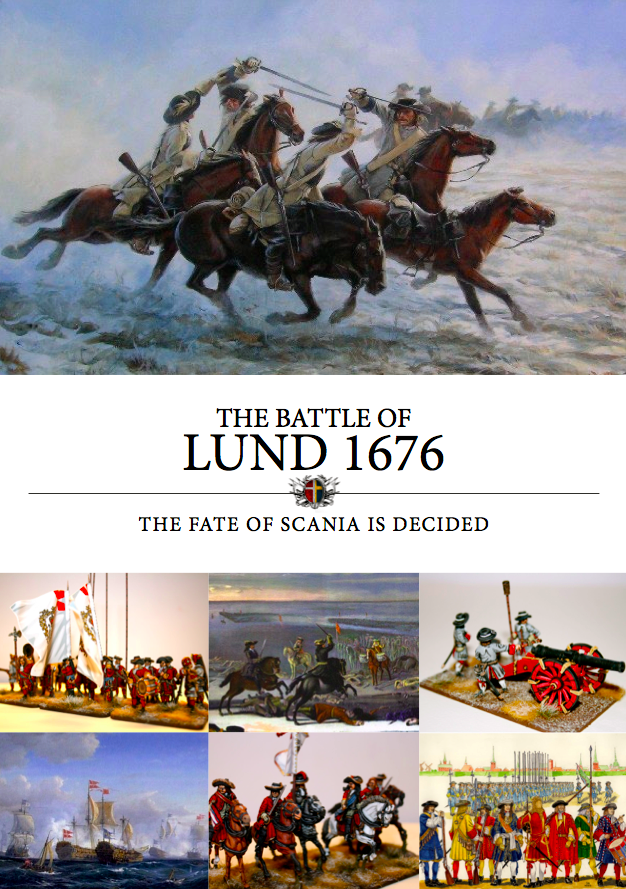
The poster we printed for our Lund 1676 Game.

We had a great reception from the other players and visitors at DFFcon, and needed not worry about any shortage of willing participators. Besides the actual Lund 1676 participation game and a Demo Game of Osprey's new Lion Rampant Rules, we also brought a little Mini-Shop of Warfare Miniatures with us. This was very well received, for which we thank the many people who supported Barry's wonderful miniatures range and rules.

The battle of Lund rages on.
The Warfare Miniatures mini-shop can be seen in the foreground.

Warfare Miniatures are launching a new range of 28mm Great Norther War figures,
which we naturally wanted to promote to the Danish wargaming society, seeing as Denmark was one of the nations in the alliance against Sweden and Charles XII during the GNW.

The poster we printed to announce the coming
Warfare Miniatures GNW range.

Below follows a range of pictures from the days at Tøjhusmuseet in Copenhagen.
Michael also have posted a wonderful set of pics from our time at DFFcon.

Battle of Lund 1676.
Jesper is directing the battle line on the Swedish side.

A great setting with plenty of atmosphere.

WW1 Aviation Game.
Beautiful terrain from moulded foam.
The airplanes are attached to the thin rods, and fastened 
into the terrain board with a needle at the end. 

WW2 Arnhem game.

A table set up for a game of Chain of Command.

The Layout of the room.
Very pleasant setting for an afternoon of wargaming.

The museum chronologically displays artifacts from Denmark's wars.

Battlefield protection then and now.

Impressive collection of uniforms from medieval to modern.


Thanks for stopping by for a read!

Wednesday, 22 October 2014

Off to Copenhagen & DffCon 2014

My latest in a series of Command stands for the collection.
This time Swedish General Simon Helmfelt.

After months of preparations, nibbling away at a huge lead pile and subsequent numerous play tests of our different “Lund 1676” scenarios, it’s finally time.
The bags are packed, tickets ready and Friday we’re off to Copenhagen and DffCon 2014.

I want to thank all the readers from around the World, who have been following this project as it grew. What started as a small skirmish game venture between fellow blogger and wargamer Michael and myself, later morphed into the largest battalion based miniatures project I’ve ever painted. 

The battle of Lund took place north of the city,
where a few small hills command the field. One of them
is the "Gallow Hill". So, of course I had to paint these two unfortunates.
Notice the magistrate's death sentence nailed to the beam on the right.

A big thanks also goes out to fellow project painters: Thomas from Denmark, Jesper from our club in Stockholm and of course Michael for getting me into this period. We’ve all pitched in to build what is an amazing looking collection in 28mm, with great labour and attention paid to historical correctness of uniforms and flags.

This brings me to the Danish flags. A special thanks goes out to Peter Smith, for taking on the work of making us a historically researched and immensely beautiful Scanian War flag sheet. These flags are the icing on the cake. 

What is a battlefield with out debris - human debris.
Gave these a thick brush of earth pigment as a finish.
Wanted them to look like trampled infantry or crashed cavalry.

When I started my Scanian War collection I decided to go almost completely with the range from Warfare Miniatures. It was the largest on the market, and had all the diversity and animation I was looking for. What I didn’t know at the time was that Warfare Miniatures’ owner, Barry Hilton, also had a huge interest in Scandinavia history with predominance on the Great Northern War. This common interest and Michael’s and my Scanian War project, quickly turned into a collaboration and friendship.

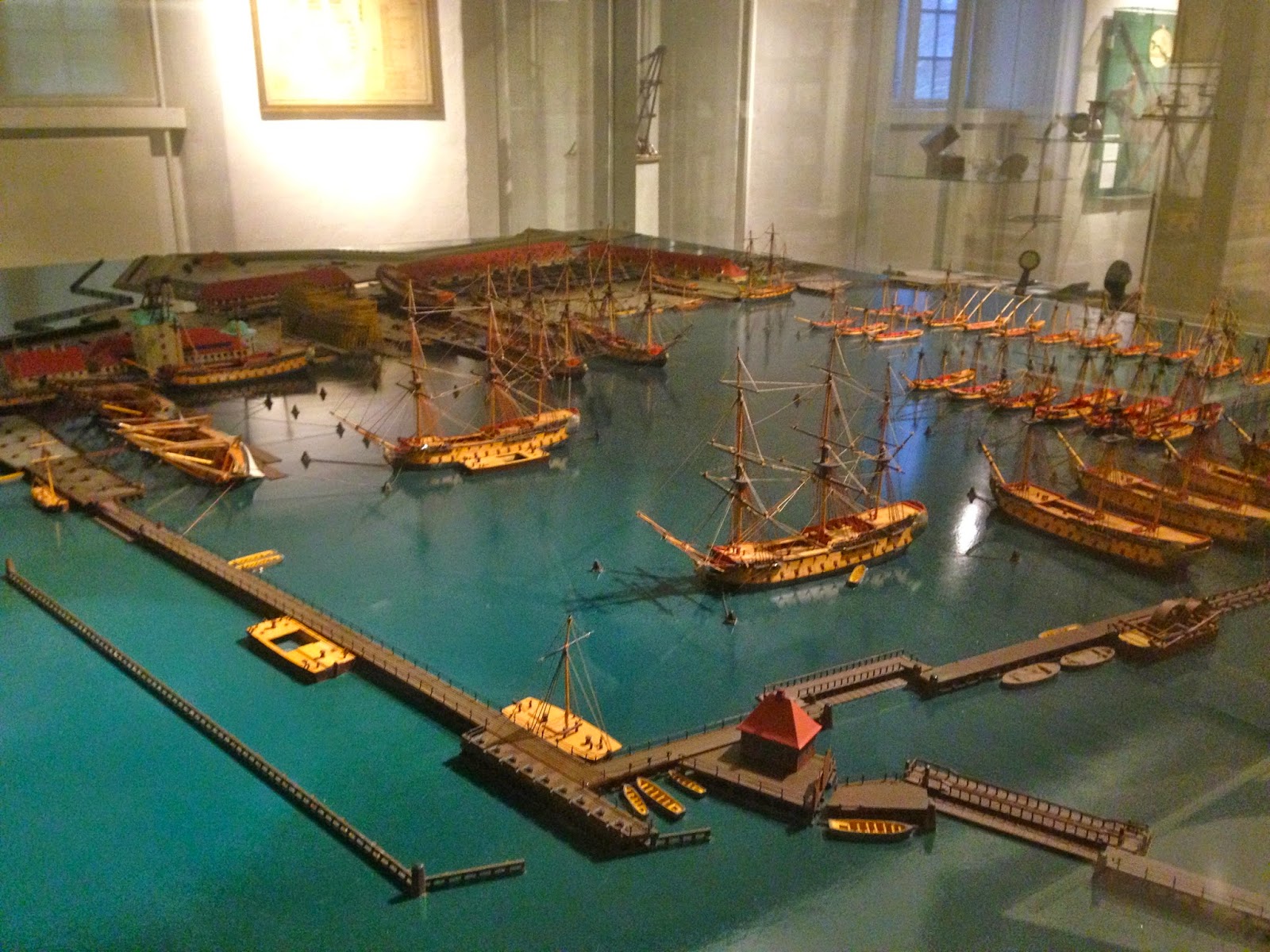
A model of the shipbuilding district "Holmen", 
Copenhagen harbor 18th century. The model can be seen at 
the Royal Danish Navy Museum.

So I’m very proud to announce that we will be carrying Warfare Miniatures, flags and even some of the acclaimed Donnybrook rulebooks with us to Copenhagen for sale at the DffCon show. Anyone attending the show can drop by our table for a look at our painted collection battling it out for the fate of Scandinavia, and if inspired buy their own miniatures and get started on their Scanian War or Great Northern War collection.

Copenhagen at its finest. Nyhavn - first build by Christian V, 
the ruling Danish king during the Scanian War.

The venue for DffCon is the old Royal Danish Armory building inside the old city centre of Copenhagen. With such a central located site, the weekend will also offer us opportunities to drop by the Royal Danish Navy Museum and Rosenborg Castle. 

Classic Danish Smørrebrød. 
Bon appetit!

After sights seeing, visiting museums and a day throwing dice at the wargaming table, I hope to offer my Swedish travel companions a first rate gourmet experience in Danish food culture – a dish of the traditional “Smørrebrød” (Open Sandwiches).

Perhaps lesser known to the World than Danish pastry, but oh so good and best-enjoyed when washed down with plenty of Danish pilsner beer and perhaps even one or two schnaps! 

Thank you very much for reading!

Friday, 10 October 2014

Carl von Arenstorff – Danish Commanding General at Lund 1676

Carl von Arenstorff pondering his next move at Lund.

As the date for the big convention game in Copenhagen is nearing, time has come to get the commanding Generals in their saddle.

At Lund the German noble Carl von Arenstorff led the Danish forces. His brother Frederic also served in the command of the Danish army, and would eventually take the supreme command at Lund as Carl got shot and had to retire to attend what would later show to be a mortal wound.

Frederic von Arenstroff - Carl's intriguant brother.
He would take command at Lund when Carl got wounded.

The Arenstorff brothers had been plunged in intrigues ever since they came to the Danish court in the early 1670's. Carl had quickly gained the King’s favour and had even been given a seat in the Royal Council. 

When the Scanian War opened and the Marshall’s baton for the Danish forces had been given by foreign recommendation to the very able Duke of Plön, the Arenstorff brothers were far from pleased and immediately set about an elaborate bad-mouthing campaign leading to the King finally dismissing his undermined C-in-C duke. 

Orders are being scribbled down by the staff.

The Duke of Plön had led the Danish forces successfully through the opening phase of the Scanian War land campaign, overseeing the occupation of Scania and tactical rebuffing of the Swedish army. He was rewarded the island of Usedom on the German Baltic coast for his achievements. 

Command then passed to Carl von Arenstorff in October 1676. Perhaps an able cavalry commander, but a very unsure card as supreme leader of an army. Quickly things deteriorated for the Danes, leading to the game-changing defeat at Lund on the 4th December 1676.

A High-Command in harmony? 
The Danish commanders prancing on their horses 
as the army, lead by the Duke of Plön, 
conquered Kristianstad. 

Perhaps it was really a stroke of luck for Carl von Arenstorff ‘s honour that he was wounded at Lund? It certainly took him of the battle at a very early stage, and thus out the blame-sphere and the subsequent infested defeat-ferment in Copenhagen, seeing the King putting many of his commanders on trial for treason. 

Oddly enough, and perhaps as an omen, Arenstorff actually started his career in the professional and highly successful Swedish army under King Charles X Gustav. He was a Swedish cavalry commander in the Dano-Swedish Wars fought in the late 1650's, that eventually saw Denmark loose 20% of its territory to Sweden, most notably Scania. 

Charles X Gustav successfully occupies all of Denmark by a daring crossing over the frozen belts of the Danish Isles in the1650's.

Now some 20 years later, Carl von Arenstorff was back in the saddle, but this time for the opposition – the Danes. Now he was fighting to reclaim to Denmark, what he in fact had precipitated the Danish Crown to loose two decades earlier. 

Another view at the command stand.

Carl von Arenstorff died in Copenhagen 6 days after the Battle of Lund, as wound-infection had spread gangrene in large parts of his body. His death marked the starting point of a large purge in the Danish high command – opening the question; how would the Danes have fought at Lund – with their superior numbers in infantry, cavalry and three times the artillery – had they been properly led, for instance by the Duke of Plön?

Thank you very much for reading.

Friday, 3 October 2014

Christian V – a gentle king with a arduous mission.

Christian V symbolically charging over a 
broken Swedish cavalry standard.

Dear readers, in a few weeks I head out for Copenhagen together with fellow club members Michael and Jesper, for a visit to this year’s DffCon gaming convention, where we are hosting a string of scenarios based on the Battle of Lund 1676.

For the purpose of these games I’m at the moment finishing up all the command stands.
Last week saw the Swedish King mount his horse and head out for battle – this week time has come to the King of the Danes, Christian V. 

The East Danish provinces;
Skåne, Halland and Blekinge - lost in 1658.
The location of Lund can be seen on the map too.

Christian was born 1646 in the Danish controlled duchy of Schleswig. He was a prince of the House of Oldenburg, descendants of the Jellinge Dynasty (The dynasty which has been in power the longest in all European history, more than 1100 years).

Another shot of the charging king.
The figure is from NorthStars 1672-range.

Ascending to the Danish Throne in 1670, his kingdom had suffered terribly under his father, Frederik III. The economically and socially important East Danish provinces had been lost to Sweden in 1658 during the peace settlement following the ”Karl-Gustav” Wars. 

This meant that not only had Denmark lost some 20% of its population, but also the strategic position as gatekeeper at Øresund, with the profitable trade taxations and most importantly its richest province of them all – Skåne (Scania).

King Christian V.
1646 - 1699.

Christian V would his entire life look across the waters from Copenhagen, eying his lost dominions in the horizon and feeling a call of destiny to take back what had been lost.

Through unintended diplomatic entanglements the opportunity arose in 1675, when France had forced Sweden to make war on Brandenburg, the ally of Denmark. Christian V declared war on Sweden, and preparations for a recapture of the eastern provinces began.

The coronation of the King in 1670.

After a successful campaign against the Swedish foothold in Germany, and the establishing the Danish naval supremacy, Christian V had the opportunity to move the war to Scania by a naval landing of his army.

On the 29th June 1675 Christian V and an army of 15.000 lands at Råå on the Swedish coast, crossing the only 5 mile wide strait. With his army watching from the enormous 500-ship transport fleet, Christian V is rowed in to the beach. As he leaps out of the boat and the sand of this old Danish dominion is again touched by its king, cheers from the many boats are heard. In response Christian V, this wonderful man, treats his audience to a little victory dance as he jumps and skips around with joy. He has his life’s goal in sight.

The massive 17 x 7 meter Danish flag - the picture is from 1977.
It was captured by the Swedes 1677, and is to this day kept in Stockholm.

Initial Danish success in the Scanian campaign saw the Swedish army retreat north to Småland, while awaiting reinforcements. Meanwhile a curious manifestation of Danish victory fever occurred. Christian V ordered a mammoth sized Danish flag to be sewn up, and hoisted from the fortress tower of Helsingborg. The flag was 17 x 7 meter (!!!), large enough to be clearly seen from the Danish coast across Øresund. It was a sign to Denmark that Scania had come back to its former owner.

A frogs view of his majesty.
No shortage of laces on neither horse or rider.

Later that year, well in control of Scania and the war, Christian V returned to Copenhagen in order to prepare for Christmas. However news of the Swedish army approaching from Småland compelled the King to return to his army, now encamped outside Lund in prepared winter quarters.

On the 4th December 1676, the fateful battle of Lund took place. Danish losses were crippling and Christian V was forced to allocate further funds for reinforcements and materiel. But in effect Lund was the beginning of the end. Never again during the Scanian War did the Danish army hold such a tight grip on its former provinces, or on the outcome of the campaign.

Christian V at the capture of Landskrona 1676.
A year later he would meet defeat at this very same location.

A further defeat of the Danish army at Landskrona on July 14 1677 settled the question to any effect. The war would drag on, but the young Swedish monarch had successfully defended his inheritance, and before either Charles or Christian could get a chance to sit down for a proper peace settlement, Louis XIV (Swedish ally) and the Dutch (Danish ally) had passed a peace resolution including a status quo in Scandinavia.

Both Christian and Charles were furious. Both had lead their armies from the front, both had seen war in the eye and risked everything for the price. And now, they had to sit down like two naughty schoolboys and take dictate.  Newer again would Christian hope to gain back Scania, and never again would Charles entangle Sweden into such close an alliance with France.

Front view - the command base is 3 inches wide.
Suitable for the C-in-C.

Christian V lived on for many more years, focussing his energy on renovating his capital, Copenhagen. It is due to his work that we today can enjoy a cold beer in the charming Nyhavn area, and on the “Kongens Nytorv” square next into you find the huge commemorative statue of this gentle but firm king.

Rosenborg Castle in central Copenhagen.

In the fall of 1698 Christian was mortally injured in a hunting accident. In pursuit of a deer, the king stormed up to the animal to finish it off, but the wounded deer kicked the king with such force, that he would never recover, but instead died after a long struggle to regain his health.

Today the “king-killer” deer can be viewed at the Rosenborg Castle in Copenhagen.

Thank you very much for reading!

Friday, 26 September 2014

Charles XI and the Battle of Lund – 1676

60 mm C-in-C base of Charles XI for 
my Battle of Lund 1676 collection.
Miniatures are from Warfare.

Charles XI came into this world in 1655 at the Royal castle “Tre Kronor” in Stockholm. He was born at a time when the expansionistic legacy of Gustavus Adolphus and Charles X, saw Sweden at its pinnacle of Empire with land possessions all around the Baltics and in Northern Germany. 

The Swedish Empire at its pinnacle 1658. 
Both Charles XI and Charles XII would be forced to 
fight to keep it together.

Charles XI was only four years old when his father died shortly after returning from a military campaign in Poland. As the young boy was deemed “Unfit to rule”, the rains of Sweden was thus placed into the hands of a cabinet of advisors called “Förmyndare”, consisting to a large degree of old and new nobility connected to the Swedish military expansion. 

Charles XI on his horse "Brilliant" - a present from Louis XIV.
This is the portrait I used as inspiration for the vignette.

As a young boy Charles was subjugated to a rigorous and very ambitious study plan, reflecting the official view of a modern and “enlightened” monarch suited to rule the great Nordic Empire of Sweden. The studying proceeded, apparently with very little result for the young monarch. What wasn’t known at the time was, that Charles XI suffered from strong dyslexia. This would result in a very “personal” style of writing and spelling, which today can be appreciated though his journal, which he kept on a daily basis.

Charles XI in the midst of battle,
crossing through the enemy's lines.

Charles ascended to the throne in 1672, and with his practical and pragmatic mentality, he quickly found that the Cabinet of advisors had mismanaged affairs to a alarming degree, and the need for some hands on change was imminent. Immediately he set upon a long and controversial restructuring process, not only reducing the political power of the Swedish nobility but also strengthening the Crown’s economy by widespread confiscations of land, from both nobility and church. 

A typical soldier's farm from the "Indelningsverket".
If the soldier got killed in battle, his widow could marry a new soldier
 or be forced to vacate the farm.

Not only the hard pressed Swedish economy got a galvanization, but also the army, which now had suffered about 50 years of decline since the glory days of Breitenfeld and Lutzen. Ever the practical man, Charles XI implemented a genius system – the “indelningsverket”. A simple concept where each soldier under the Crown would get a small farm to keep in peace time. Here he could grow crops, raise a family and live a good and healthy life. 

Each farm clearly marked the regiment and company to which its resident belonged.
Here the Wartofta Company of the Royal Skaraborg Regiment.

When war lured, the king could effectively call up 18.000 foot soldiers and 8.000 cavalrymen from these farmsteads on a very short notice, as each unit already had a drilled and predetermined mobilization plan. The regiments were strong in morale, as each unit consisted of men from the same shire or “socken” in Swedish. So when the fighting was at its worst, with bullets and cannonballs tearing through the ranks, these men who were all acquainted from back home, would stand fast as no one wanted to loose their face in front of the neighbour. 

This reform was the very hearth the Swedish army of this period, later referred to as the “Karoliner” period due to the name of the ruling kings, Charles XI (Karl in Swedish) and his son Charles XII.

Another shot of the monarch as he gallops 
across the battle field on his horse Brilliant.

Early on Charles XI proved to be much more the hands on reformist and modernizer of Sweden, rather than an expansionistic warrior king like his father and the earlier Gustavis Adolphus, with his campaigns during the Thirty Years War.

In an attempt to diplomatically cool things down with the Nordic arch-rival, Denmark, Charles XI was engaged to the Danish King’s sister, Ulrika Eleonora, one year younger than Charles.

At the battle of Lund Charles got so caught up in the action,
that he rode up to a Danish regiment and gave the order to attack.

They were a good match, and would later have a seemingly happy marriage, but due to the pan-European intrigues of France and Holland, and a complex network of alliances and defensive pacts, Sweden and Denmark suddenly was forced to declare war on each other – The Scanian War. Something the Danish King, Christian V apparently did not mind too much, as he saw it almost as his life’s mission to re-conquer the lost East-Danish provinces. Thus the wedding was postponed, and the reformist Charles was forced to become a warrior king.

Risking everything, Charles dashes through the Danish lines
and rejoins his main force at the battle of Lund.

At the decisive battle of Lund Charles lead his army in person. The odds were sky high, but Charles proved his worth and the fate of the battle was decided with him, when he bravely risked his own life breaking through the Danish lines to reunite his army, and create a crushing pincer manoeuvre, that would break the entire Danish army. 

After the Scanian War, Charles XI continued on his reforms, strengthening Sweden against future threats. Now much wiser from his previous experience of “profitable” European alliances, he managed to keep Sweden neutral and out of the power sphere and wars of Louis XIV.

Close up - Warfare offers some nicely proportioned horses,
and there is not much flash to clear. 

In 1697 the now 41 years old Charles XI became ill. After a long and painful fight against pancreas cancer he died on the 5th April 1697, leaving the Swedish Empire economically fit and with Europe’s most professional army. Something his son would need much sooner than he had preferred. 

Thanks you very much for reading!