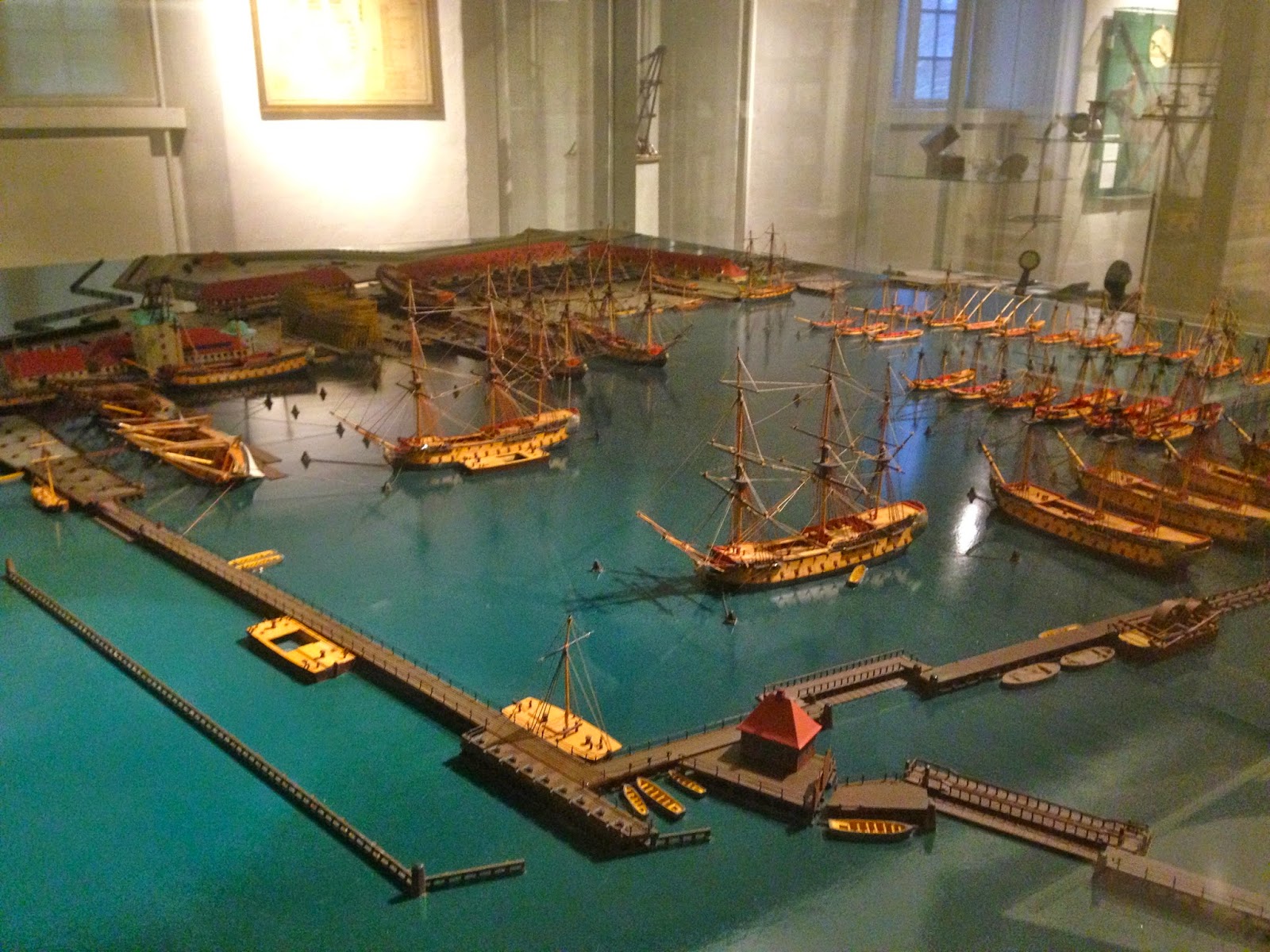
GHQ's 1/2400 version of the HMS Iron Duke.
Time to once again rewind the clock to the
afternoon of May 31st, 1916 by taking a closer look at HMS Iron Duke, the
powerful flagship of Admiral Sir John Jellicoe, commander of the British Grand
Fleet at the Battle of Jutland.

"The watchdog of our Empire" - Admiral Jellicoe.
Given the immense task of defending Britain’s
naval supremacy against the formidable Imperial German navy, Admiral Jellicoe
was under no small amount of pressure. He was, like Winston Churchill put it,
“The only man on either side who could loose the war in an afternoon”.

If the Royal Navy and the Grand Fleet were
to suffer a big defeat, the Imperial German Navy and the vast German Army was enough
to pose a real threat to Britain itself. Thus the odds were sky high for
Jellicoe at Jutland, as his task in effect, was to lure the Hochseeflotte,
using Beatty’s battle cruisers as bate, into an ambush consisting of the massed
firepower of the numerical superior British Grand Fleet, under circumstances where
he could premeditate and control the risks.

The HMS Iron Duke arrived to the Battle of
Jutland at the head of the British main fleet, steaming out from Scapa Flow to
spring the trap, so costly prepared by Beatty, on the Hochseeflotte. As Jellicoe
steamed southwards he had only fragments of intelligence from Beatty, but
enough to know that what was coming up from the South, close on Beatty’s tail,
was the entire German fleet.

In the heat of the pursuit and heavy
fighting, Beatty had lost contact with the enemy for a moment, and thus could
not accurately pin point the location of the approaching enemy fleet to
Jellicoe, which left the admiral guessing whether to deploy his column of hard
hitting battleships to port or to starboard.

In this instance, Jellicoe had to rely on
his many years of expertise and seaman’s gut feeling. He was about to make,
what was later described as “ The Royal Navy’s most important tactical decision
of the entire 20th Century”.

If he swung the wrong way, he would expose
the Grand Fleet to the entire fire power of the Hochseeflotte’s Krupp guns,
while an opposite turn would put him in the most formidable position, offering
the line of British battleships a chance to shoot “broadsides” and the
approaching German fleet, only able to fire their forward guns – what is
referred to as “Crossing the T”. Problem
was, he didn’t know the position of the enemy, and thus had to make a qualified
and very fateful guess.

Resemblance to the actual CoA of Wellington.
Jellicoe had character. He had a gentle
firmness about him, which still translates to the reader, when going over the
historical accounts of the Battle of Jutland. After a few silent moment of
contemplation on his command bridge on-board HMS Iron Duke, Jellicoe gave the
order deploy the battle line to port side (Left), which would prove to be a
most important and decisive, as this indeed put him in a position crossing the
enemy’s “T”. Scheer’s fleet was given such an initial pounding, that the
Hochseeflotte had to preform as series of complicated extraction manoeuvres,
turning about and heading full throttle back the safety of the Jade.

Jellicoe in effect turned the Battle of
Jutland, which started out very gloomy for the British with the loss of three
mayor ships and about 6.000 lives, into at least a strategic victory that would
further confirm British naval supremacy and, likewise important, convincing the
Kaiser to be even more cautious in ordering out the Hochseeflotte to sea.

HMS Iron Duke was names after the famous
British general Arthur Wellesley, 1st Duke of Wellington, also know as ”The
Iron Duke”, a name he got after entering the stormy world of politics, which
resulted in Wellington fitting the windows of his London residence with iron
shutters, to prevent the angry mob from smashing them.
HMS Iron Duke was the first battleship to be
armed with anti-aircraft guns. A very modern ship with huge firepower, the Iron
Duke also gave name to its own class of ships, to which the Benbow, Emperor of
India and the Marlborough also adhere.
The Iron Duke rectified many of the errors
made in earlier Dreadnought classes, for instance the beam was extended to
afford more stability to the 6in guns and protection against underwater damage.
However, she was more lightly armoured compared to the contemporary German
class, the König. This was a compromise to enable the huge weight of her
superior gunnery.

Ship Data: HMS Iron Duke
Laid Down: Jan 1912
Launched: Oct 1912
Completed: March1914
Constructed at: Portsmouth
Displacement: 26.100 tons
Dimensions: 623 x 90 x 32 ft.
Main Guns: 10 x 13.5in 45cal
Armour: 4 – 12 inch belts / 2.5 inch deck /
11 inch Turrets.
Machinery: 4 Shaft Parsons Turbine (29.000
shp = 21knots)
Endurance: 7.780Miles at10knots
Cost: 1.945.000 Pounds in 1912 (ca. 480
million Dollars in todays currency)
Career:
She was the flagship of the Home Fleet in
at the outbreak of the war in 1914, and later also became the flagship of
Admiral Jellicoe’s Grand Fleet, until she was relieved from the position by
Queen Elizabeth in late 1916. She served at Jutland, scoring many hits
with her tremendous firepower, but did not herself receive any. After the First World Ward she served in
the Mediterranean, the Black Sea and later as part of the Atlantic Fleet. In
1939 she was retired from active service and became a gunnery target at Scapa
Flow. After World War Two she was sold off for scrap to the British Iron and
Steel Corp. in 1946.
Thank you very much for reading!




%2C_by_Arthur_Stockdale_Cope.jpg)